Try Cloth Diapers Risk Free

Showing posts with label diaper rash. Show all posts
There are a lot of cloth diapering moms that get really, really lucky. As long as their babies are cloth diapered, they almost never have to deal with a serious rash. Whether it’s the lack of chemicals or simply the stay-dry fabric, their tiny bundle’s bum remains entirely rash-free throughout all of their cloth diapering career. “Why,” they brag openly, “the most I ever had to deal with was a little bit of redness!” That’s great for those moms (and their babies), but others just aren’t that lucky. So what do you do when your baby gets a rash while they’re in cloth?

Consult your doctor, not the internet. If you Google, the results will terrify you (because of course, the first result is never “this is a perfectly common rash that will clear up on its own”). If you go to a Facebook board, the answers will range far and wide, with every mom swearing by a completely different remedy. If your baby has a challenging rash that just won’t go away, or a particularly bad rash, or even just a rash that causes you to worry, then talk to your pediatrician! They’ve seen it all before and will have a better idea of how to treat it. That’s not to say that your mommy friends won’t have some great natural remedies for minor diaper rash; it’s just to say that your pediatrician is probably a safer source of information for any major health problem.

If you need to use heavy-duty rash cream, use a barrier. This might mean purchasing a roll of liners, using Viva paper towels (they’re strong, absorbent, and do a great job as a barrier). Personally, I prefer cutting up fleece and using it as my barrier, and so far, it’s worked fine. However, heavy-duty rash cream is designed to create a liquid-proof barrier—so you don’t want it to end up on your diapers. If it does in spite of your best efforts, scrub the diaper down with Dawn and a toothbrush. Most of the time, that will take care of it.

Also, keep in mind what diaper you’re putting on your child if you’re going to be using rash cream. Flats are cheap, flour sack towels under a dollar, and if something happens and you can’t get it to start absorbing again, you won’t be out much. On the other hand, putting your baby in your favorite custom work-at-home mom diaper and hoping that the paper towel you’ve got in there will be enough to keep the rash cream off of it might not be your best bet.

Air time, air time, air time. Rashes need to be dry to heal. If you’ve got a crawler or a walker on your hands, the idea of letting your child go diaperless might terrify you. Try taking a minute to play with your naked baby while you’re changing their diaper—at least long enough to make sure that their tiny bum is completely dry—or wiping them down with a dry wipe before putting a new diaper back on. Also, if you can’t get in naked bum time, fitted diapers allow for a lot more airflow—just be prepared to change much more often depending on how frequently your baby wets. A prefold pinned into place can also be effective, but don’t let baby run around in a snappi’d or boingo-d prefold or flat without a cover—those things are sharp!

Change frequently. Rashes need to be dry to start to heal, right? So you don’t want your baby sitting in a wet diaper any longer than they have to. If this is a challenge for you, try changing whenever you move to a new activity—before nap, after nap; before feeding, after feeding; before leaving the house, after arriving at your destination; and so on. The great thing about cloth diapers is that it doesn’t cost you anything extra to change more often, and it may be the difference between a rash that clears up in a couple of days and a rash that sticks around for a while.

Don’t be afraid of disposables. Sometimes, what you really need is a good, healthy coating of non-cloth-diaper-safe rash cream and a disposable diaper. Flip and GroVia both make some great disposable inserts—and the best thing about them is, they don’t come sized. That means that if you use half a dozen of them now and don’t pick them up again for a year, they’re still going to fit just fine, instead of being something that you have to throw away or repurpose. No need to guess about size, either (which can be a serious concern for cloth diapering moms—talk about one that disposable diapering moms don’t understand!), because they’re designed to fit any baby, and you can always double up for added absorbency if needed. It’s not “failing” if you need to use a few disposables; it’s just taking care of your baby.
With any luck, your baby will be one of those who breezes through their diapering years without a major rash problem; but if they aren’t, well…at least there are ways to get through it!

By Emily


Would you like to be a contributor on The Cloth Diaper Whisperer? We're always looking for creative writers who would like to share their cloth diapering tips. To find out more Contact Us
Like Tweet Pin It

What's with the Rash?

Read the full story here...

When Little B developed an infected ingrown toenail at just 2 months old, I thought that the antibiotics that the doctor prescribed to treat it would be the end of my worries. Little did I know that our adventure was just beginning! About a week into the 2-week course of antibiotics, he started developing a diaper rash. Back to the nurse’s hotline I went!

Having described the little red bumps and redness in the creases of his legs and that if I only put rash cream on the red part, other areas just broke out, the nurse and I were able to determine that Little B had likely developed a yeast rash. Since I caught it at the very beginning, she suggested that instead of prescription medicine, we should try some home remedies first. So we gave him baths 3 times a day in warm water and baking soda followed by lots of diaper-free time, and continuing with traditional (petroleum-based) cream mixed with over-the-counter miconazole (yeast infection cream) at every diaper change. This necessitated the use of a flushable liner. We liked the Bummis brand because their generous size kept our diapers protected even when they inevitably shifted, however we did find that we had to throw them out rather than flush because our old plumbing could not handle them.

After two weeks on this regimen, we were all getting a bit frustrated. While the bumps seemed to have disappeared and the rash was no longer spreading, Little B still had quite the red booty in some places. I felt like his booty should be looking better at this point, and my mommy instinct was telling me that things needed to change in order for Little B to get fully healed. Little B had no patience for his booty baths, even though we had made up a little song and dance for him (“A-booty booty booty, A-rash rash rash!” bought us maybe half a day). Furthermore, in our exceedingly dry Minnesota winter, even with lots of lotion Little B’s skin was getting very dry. To top it off, our caretaker kept forgetting to use a liner with the rash cream – I nearly cried when a generous helping of cream ended up smeared on our brand new bumGenius 4.0 Mirror! Not my precious Mirror! 4 hours of Dawn scrubbing with a toothbrush and one very sore wrist later, I was DONE and started looking for other options (no worries, the Dawn scrub followed by a hot wash with cloth diaper-safe detergent really did remove the cream and my diaper was saved, I mean Little B’s diaper).

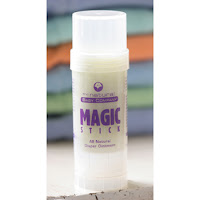
After a lot of research, I realized that Little B’s yeast rash seemed to be cleared, but the bright red, dried-out looking rash that remained behind (pun intended) was most likely due to how acidic his poop had gotten after taking the antibiotic. A close friend suggested 100% pure, unscented argan oil to help his very dried out little booty. Being a pure, plant-harvested oil, it did stain our cloth diapers. We like the argan oil versus other types of oils because it soaks into the skin within seconds, and a little goes a long way! I also discovered that there are myriad cloth diaper-safe diaper rash creams. I promptly ordered the aptly named GroVia Magic Stick to protect Little B’s healing booty from what it was producing, until his digestive system regulated. We love the Magic Stick because the twist-up design means you don’t have to get any goop on your hands, and after a suspected yeast rash you can cut off the top with a kitchen knife and still use the rest of the stick rather than having to throw out the whole thing.

After every diaper change, we spread on a little argan oil, let it soak in during 10-30 minutes of diaper free time, then slathered him up with his Magic Stick before replacing his diaper. This worked like a charm – within 2 days he was totally healed and the rash finally stayed gone. To ensure it didn’t come back, we added chlorine-free bleach (half the manufacturer’s recommended amount) to our diaper laundry and washed on hot then did two extra rinses. Regular hot washes during the infection should do the trick but we added the bleach just to be on the safe side.

We still use the Magic Stick every night before bedtime, and every time we think he might be starting to develop something, we spread on a little argan oil and seal it up with the Magic Stick at each diaper change, and it’s usually gone by the next morning. No more liners and messy paste, no more worrying about my precious, pretty diapers getting ruined, no more carpal tunnel, and no more angry red booty!

Note: If you suspect any type of booty rash please call your healthcare professional first! This post is meant to help us cloth-diapering parents navigate treatments that won’t ruin our precious, pretty diapers and does not substitute for healthcare professional recommendations.

Bio: Leah is a full-time molecular biologist, partner to John and mommy to Little B & her 3 furbabies. She’s a headstrong Minnesotan woman who loves to cook, craft and cloth diaper.


Would you like to be a contributor on The Cloth Diaper Whisperer? We're always looking for creative writers who would like to share their cloth diapering tips. To find out more Contact Us
Like Tweet Pin It

Adventures in Booty Rash

Read the full story here...

Okay. Baby has a yeast rash. Not only do you have to get it cleared up on the bum, you also have to make sure you get the yeast out of your diapers.

So what do you do?

First, make sure your baby’s pediatrician confirms that it is yeast and treats your little one for it. The topical creams that are needed are not cloth diaper safe, so you should use a liner or disposables if that’s an option. Once you do the routine outlined below, you should use a barrier or disposables while your baby has the rash and for at least 5 days after the rash is gone. This is because your diapers could re-infect your baby. Disposable liners are a great option but to be honest, disposables are probably the easiest until baby is yeast-free.

On the way home from the doctor, stop at a vitamin or whole foods store and pick up grapefruit seed extract and tea tree oil. (Make sure it is grapefruit seed and not grape seed.) GNC has it. I’m sure Vitamin World or Vitamin Shoppe or Whole Foods would as well.

You’re also going to need chlorine bleach. Some sites will tell you to use oxygen bleach but it’s not enough to kill the fungus. Chlorine bleach will not hurt your diapers. In fact, some brands, including bumGenius, recommend adding bleach to your diapers once a month to keep them on their A game.

Wash all of your diapers, cloth wipes, and liners with detergent. Anything that came in contact with the yeast infection needs to be disinfected. Similar to stripping, it’s best to do this with clean diapers. Run a hot wash next. You don’t have to dry your diapers in between. Water should be around 122 F. Add ¼- ½ cup chlorine bleach to the water if you don’t have a bleach dispenser. If you have a dispenser, use that. Also add about 30 drops of the grapefruit seed extract and tea tree oil to the wash. After everything is added to your machine, put your diapers and everything in. After they wash, I’d do two or three extra rinses or a short wash to make sure all the bleach is out.

If possible, put your diapers out in the sun to dry. This will make sure they dry completely and sun never hurts diapers.

Notes: You need both the bleach and the grapefruit seed extract because bleach kills the yeast while the gse kills the yeast spores.

Don’t put the bleach directly on your diapers. Add it to the water before adding your diapers so it’s not concentrated when touching your precious diapers. Good luck and hopefully your little one feels better soon.

Bio: Nicole is a mother of two little ones, Sophia, 5 and Joshua, 4 months. She is an Army veteran and a pastry chef. In the past year or so, she dove headfirst into a more natural lifestyle and loves every minute of it.


Would you like to be a contributor on The Cloth Diaper Whisperer? We're always looking for creative writers who would like to share their cloth diapering tips. To find out more Contact Us
Like Tweet Pin It

My baby has a yeast rash!! How do I get my cloth diapers clean?!

Read the full story here...

We started cloth diapering our older boy when he was two-and-a-half. I thought I had everything figured out by the time we had our second child, but baby number two has proven to be difficult. As much as we loved our pocket diapers with our first child, our second has sensitive skin, and almost all man-made fibers give him diaper rash, especially polyester. For those who don't know, microfiber and fleece both are made from polyester- that's a lot of diaper material!

At first, I freaked out, wondering if we were going to be able to cloth diaper him at all. Then I realized that disposable diapers would only made the problem worse, and I bucked up and started trying things. We have destashed and restashed three (yes, three!) times in the past four months, and here's what I've learned:

  • Not all sensitivities are created equal. Technically, our son does not have any allergies to diaper material. Some kids do have allergies to certain materials, and those allergies will result
    in a rash that looks like hives. Sensitivities, however, are much harder to figure out. Generally, kids with sensitive skin will get diaper rash when they wear an incompatible diaper, and this rash may be difficult to get rid of. The resulting rash will usually be at its worst in the morning, after baby has had the diaper on the entire night.
  • There are some obvious materials that cause sensitivity. The most common causes of sensitivity are man made materials or wetness. Some kids, like mine, cannot tolerate synthetic materials such as polyester, so these kids need to steer clear of anything marked “stay dry”. On the other hands, some kids are very sensitive to wetness, so these children need to use stay dry products all the time or use a fleece or suedecloth liner against their skin when they have on natural fibers.
  • Some sensitivities are harder to figure out. In addition to intolerance to synthetic fibers, our son also has sensitivities to rough fibers. He cannot have any wool or hemp products touching his skin. The long, rough fibers in hemp and wool irritate some babies' skin, and they should be avoided. Usually, fiber sensitivities run in families, so if you or your spouse can't tolerate wool, there's a good chance your child can't either. Some kids also have difficulty wearing diapers with dyes or inorganic compounds, like pesticides, in them. For these kids, unbleached and organic is the way to go.
  • It can be very easy to diagnose skin sensitivity and allergies. If your child suffers from constant diaper rash, try switching to organic, unbleached materials for at least a week. If the rash is cleared up by switching to pure, natural fibers, there's a good chance your child has either skin sensitivity or allergies.
  • There are plenty of diapers out there for sensitive-skin kids. Diapers labeled “organic” and “unbleached” are usually pretty safe for kids with sensitive skin. For all-in-one users, try Bumgenius Elementals or Grovia All-In-Ones. You will probably have to skip pocket diapers because of the stay-dry pocket, but Flip, Grovia, and Best Bottoms all make easy to use all-in-two systems with organic options. For a less expensive option, try unbleached prefolds or flats. Bamboo fitteds are also an excellent option for kids with sensitive skin because bamboo is both natural and a short fiber. Bamboo fitteds are also good for a kid who is both sensitive and a heavy wetter, like my little guy.
If you have a baby with sensitive skin, rest assured that you can find a cloth diaper option that will work well for you. It may take some trial and error, but cloth is the best option for delicate skin.

Bio: Heather is a fourth-generation Montanan, mom to two crazy-boys, and wife to one amazing husband. You can follow her eco-sensible lifestyle at moderatelycrunchy.blogspot.com

Like Tweet Pin It

Not all Sensitivities are Created Equal

Read the full story here...

We’ve all heard cloth is good for baby’s skin as compared to the plastics and chemicals commonly found in disposables, but what if your cloth diapered baby breaks out into a rash that clears up when you switch back to throw-aways? This happens more often than you might think, but there are lots of things you can try before giving up on cloth.

First of all, tackle the rash while you search for the cause. For a generic rash, any cloth diaper safe cream will do, but if you need something stronger or have to get a prescription and the ingredients aren’t cloth friendly, invest in a roll of flushable liners to use in your diapers while medicating your little one’s bum. They are very economical; the 100-count Bummis roll is just $8.00. And before assuming cloth is the problem, rule out medical or biological causes like yeast, food allergies, teething, colds and flu, all which can spark a rash on your baby’s bottom.

Ok, so if baby is not sick or teething and doesn’t have any food allergies, then why the rash?

Is your baby wearing primarily pockets? If so, then the answer is most likely that he or she is sensitive to microfleece, suedecloth or velour, all of which are commonly used to line the inside of diapers. Although these are marketed as “stay dry” fabrics and work great for most babies, sensitivities are possible. Fortunately, there are pocket diapers like the BabyKicks Basic and BabyKicks Premium which give you the option of putting a natural fiber like hemp right up against the skin, instead of synthetic polyester. Another option would be to try bamboo pocket diapers, which have a gentle and hypoallergenic inner lining. And remember that the microfiber inserts included with pocket diapers are never meant to be placed right against your baby’s skin. They must be stuffed in the pocket as this fabric is irritating to almost all babies, sensitive or not!

Is your baby using cotton prefolds or flats? It’s possible that your child is especially sensitive to wetness, even though you’re using natural fibers. In that case, pockets or other “stay dry” diapers might work for you. If you are curious about pockets but don’t want to shell out a lot of cash, Kawaii would be a good brand to try as an experiment. If you want to stick with your prefolds or flats, consider laying a stay-dry insert on top. Sometimes, just changing more frequently and keeping a good cloth diaper safe cream on their bum will also do the trick. And yes, it’s even possible that your baby could be allergic to cotton, so if the redness hangs around after trying the above fixes, consider hemp or bamboo instead.

One of the best things about diaper inserts and liners is that they can allow you to test out a different fabric against your baby’s skin while still using the system you have in place.

Is your baby’s rash or skin irritation limited to a very small area? Some mothers might discover redness around the waist or legs and assume baby is allergic to cloth. But the issue is most likely improper fit. When the waistband or leg band is too tight, it can cause some really nasty redness. Sometimes, velcro is the culprit. Make sure it’s not rubbing your baby’s skin anywhere when fastening the cover or diaper. Your baby might also be sensitive to the type of fabric used on the waistband and leg bands, such as fold-over elastic which contains latex. Try a diaper or cover with the elastic hidden or “encased” inside PUL, TPU or microfleece.

Is your baby getting a rash no matter what diaper you try? Does the rash go away as soon as you go back to disposables? In this case, there might be a problem with your laundry routine. Have you tried switching detergent brands in case there is an ingredient your baby is sensitive to? Are diapers being thoroughly rinsed, or could they use a good stripping?

Getting to the bottom of a rash, allergy or skin sensitivity may take a little bit of detective work, but it’s worth the time and effort if it will help keep your baby and cloth and keeping saving your family money!

BIO: Anne is a cloth diapering, home schooling, hobby farming and just all-around busy mother of 5 wonderful children and is expecting another in January! She is the creator of the Zephyr Hill Blog and works from home as a professional naming consultant through her business Discovery Naming Service.
Like Tweet Pin It

Cloth Diapering a Sensitive Bottom

Read the full story here...

Redness – Desitin, Bumps –Desitin, Open Sores – Desitin, Desitin – Desitin - Desitin… This is the chain of events that would occur when P got a diaper rash. P’s rashes usually occur when he is teething, but they can strike up for no reason at all, and take days to get rid of. We have been prescribed medicated diaper ointment and special spray’s to use when cleaning his bottom, all with little relief. Our method to the madness was to air dry and to keep his bottom clean and covered in smelly ointment (that is an oxymoron if I have ever heard one)!

P’s diaper rashes were one of the main reasons that I wanted to switch to cloth diapers and one of the only reason I was a little hesitant to make the switch. Before we made the switch to cloth diapers, I read a lot of information online saying that people that dealt with cloth diaper rashes ended up putting their little ones in disposables until the rash would clear up. I was flabbergasted by this information; if people were putting their children in disposables to get rid of the rash, I could only imagine the sores that would cover P’s little bottom from a cloth diaper rash!

Well with diaper rash comes diaper rash ointment… so the research continued. I was discouraged with my findings for cloth diaper ointment; most of the cloth diaper “safe” ointments still recommend that you put a liner in the diaper to protect the diaper from any leaking and repelling issues. I was determined to find something that was truly cloth diaper safe!

One day while researching newborn cloth diapers, I stumbled across some information, the article recommended that you use olive oil on your newborn’s bottom for the first week after birth to help prevent diaper rash, olive oil check (we cook with it so it is just a matter of getting it in the jar located in the nursery before babies arrival in December). The article went on to pay attribute to another type of cooking/baking oil, Coconut Oil. The article commended Coconut Oil for its quick healing ability and went on to say that it is completely cloth diaper safe. I was very intrigued so I researched further and ended up putting Coconut Oil on my shopping list, it couldn’t hurt to try.

After figuring out a diaper rash plan of attack (Coconut Oil), we ordered our cloth diapers, a sample size of CJ’s Butter Ointment and liners (as a backup plan). I then headed out to the store and purchased a jar of Coconut Oil, most local grocery stores carry it in either the cooking/baking oil section or in the pro-biotic section.

Our diapers arrived and P has been in them for 2 months, no redness, no bumps, no sores, no rashes, no Desitin…

We have been dreading the arrival of P’s final tooth! Well the other day that pesky eye tooth reared its ugly head! I picked P up from day-care and D said she thought he was teething because he had been drooling a lot (his shirt had been changed twice already and his current shirt was soaked) and he had started biting again (P’s bad bad teething habit). I asked if she noticed any rash starting (knowing that with a new tooth also comes a new rash) and she said that his bottom looked great all day! We got home and I quickly changed him, trying to stay on top of changes so a rash wouldn’t start. I changed him 3 times in a matter of 5 hours (yes a little OCD and a bit challenging when dealing with a not so patient 2 year old), after the first change his bottom looked good, the second change there was a little redness around his area (nothing to cause concern, a little air drying time was all that was needed) and by the third change, bedtime change, he was sobbing because his now bright red bottom hurt so bad! In slight panic I reached for the “emergency” drawer (packed with liners and the sample size container of CJ’s Butter ointment), but as my hand fell upon the drawer my eyes met the jar of Coconut Oil, I pushed the drawer back in its place and decided that we would test the Coconut Oil method for overnight protection. I was hopeful that it would at least contain the rash to just redness and that we wouldn’t have to bring out the 4 sole disposables that I have stashed in the bottom of the “emergency” drawer.

P was off to bed with a refreshing smell of Coconut lathered across his bottom. I set my alarm for 2am so that I could change him in an attempt to keep the rash at bay, but when I entered his room I was surprised to discover that he was soundly asleep (when he was in disposables and had a rash, he would wake up in the middle of the night screaming, demanding to be changed). I couldn’t bring myself to wake him up, so I went against my better initial judgment and went with my mommy instincts (yes there are times these contradict each other) and left P to sleep peacefully.

When I went to change him in the morning I asked if his bottom hurt and he said No! I didn’t fully believe him, thinking he was still half asleep, but as I laid him on the changing table and took off his diaper I was shocked to find that there was not a red spot anywhere! NOTHING! He had a beautiful peachy baby bottom that still smelt of coconut! P and I did a happy dance and we went about our day diaper rash free!

A few “good to knows” when purchasing Coconut Oil:
1. Coconut Oil comes as soft solid, instead of as a liquid; it melts right in your hand or your babies’ bottom, I just rub my finger across the top and it melts onto my finger so I can then rub it on my little ones bottom.
2. A little goes a long way!
3. Look for an organic, cold compressed, unrefined Brand of Coconut Oil; this will ensure that you are receiving all the benefits that Coconut Oil has to offer, (if you are using Coconut Oil with little luck, it probably isn’t cold compressed and is probably a refined version, try another brand).
4. Coconut Oil is antibacterial and antifungal!!!!
5. Best of all… Coconut oil is COMPLETELY cloth diaper safe; it comes right out of cloth diapers in the wash. No need for liners or a protective barrier!
Coconut Oil will be the only thing that I reach for when a rash occurs! I feel so relieved to know we have an actual fight against diaper rash and that it is something I feel confident won’t wreak havoc on my precious stash of fluff! Don’t worry the CJ’s butter will go to good use, fighting dry and cracked skin from the harsh MN winter!

Bio: My name is Amanda and I am a mother to two amazing little boys and am expecting a little girl in December! Cloth diapering mommy who is ecstatic to have found a better smelling, faster working, and healthier alternative for Diaper Rash treatment!
Like Tweet Pin It

A Tropical Twist on Diaper Rash Cream!

Read the full story here...

Diaper rash is one of the worst things in my opinion when it comes to diapering.  I’m willing to bet there are other moms out there who are frustrated with diaper rashes also, and as a fellow cloth diaper-er I wanted to share a few tips.

First off, my experience with diaper rash has been extensive.  My middle child, and now youngest also, are wheat-gluten intolerant (still going through inconclusive tests for Celiac disease).  There are diaper rashes, and then there are allergy diaper rashes.  You’re dealing with a whole other monster.  The rashes with our oldest lasted almost an entire year while we tried to find the culprit.

Whenever either of my children ingest a wheat or gluten product, there is massive diarrhea within 24 hours, and a large open blistering rash follows, usually with the first awful diaper.  Most people  can’t believe we choose to cloth diaper through diarrhea…but honestly it helps SO much.
 
We don’t have the “up the back” blowouts with our diapers, especially our bumGenius 3.0s.  It all stays contained nicely.  Using our own cloth wipes and homemade wipe solution saves money as we go through many in a short amount of time.  Our house also doesn’t stink (take your average stinky diaper and multiply it by 10 for an allergy diaper) because we use our diaper sprayer to put the entire stinky mess down the toilet, not into the trash.

Another thing we love about using cloth diapers is when the rash is so bad it starts to bleed (about day 2) we put on a flat or a pre-fold with a snappi and no cover.  They breathe nicely while still protecting our furniture/carpet.  As soon as they are wet/dirty we can tell and change them.  Nothing sits on their skin more than a few seconds.  This also helps dry the rash out so it can heal faster. 
A lukewarm bath with lots of baking soda in the bottom of the tub/sink helps heal them up.  We use Grandma El’s diaper cream after to help protect the rash area.  It smells nice and does a decent job protecting them.

Although we hate to do it, and it is hard to admit, there are times when we have to use disposables.  I know, I know.  Their rashes have gotten bad enough though that we have to put prescription cream on them because of infection.  Our diapers are an investment and I do not recommend using any diaper cream on your cloth that isn’t CD friendly.  Even with Grandma El’s we use a disposable liner to help protect the build-up on our diapers.  Along with that, we do what is medically necessary for them-bleeding blistered bottoms are nothing to mess with.
 
Thankfully our two year old is now potty trained and has learned to not eat every little thing he can get his hands on!  But now we’re starting the journey all over again with our 11 month old.  We’re just so glad we have cloth diapers and CD accessories to help us get through!

By Jenney
Jenney is a home daycare provider and mommy of three.  She has been cloth diapering since October, 2008.  www.thedraystoday.blogspot.com
Like Tweet Pin It

Dealin' With Diaper Rash

Read the full story here...

My cloth diapering journey began last year at this time.  Black Friday at Kelly's Closet.  I ordered some fitteds, covers, and some going-out-of-stock GroBaby diapers for some amazing prices.  At the time, I wasn't even pregnant yet.  (My husband didn't find out about my purchases until we discovered we were pregnant with our first child in December....)  Since then, I have bought newborn fitteds, BumGenius All-in-Ones, Mother-ease fitteds, and a couple of pocket one-sizes.  I am, as many cloth diapering mothers have said before me, a cloth addict. 

I knew I wanted to cloth diaper since I babysat for a Fuzzi-Bunz cloth diapering family before I was married.  Less smells, less cost, less waste, less rash.  My baby boy, Ezra, was born in August.  We used disposable diapers and wipes for the first two weeks, but then I was looking forward to getting started with my newborn fitteds and covers.  We continued to use disposable wipes until our son was one month old.  Then I brought out the cheap 'baby washcloths' I had bought at a Dollar Store.  I spent $10 and got over 50 wipes.  They work perfectly.  

My wipe solution journey was just beginning.  I began with two plastic tubs: one for my wipe solution of a mix of our natural liquid soap (Dr. Bronner's Baby Mild) and water, and the other for just water.  This system worked nicely until, after a couple weeks, our little boy had a tiny red rash on his bottom.  We used some cloth-friendly rash cream, but it still was a persistent rash.  I investigated further, and since Ezra and I were dealing with breastfeeding thrush, I discovered that white distilled vinegar was a good cure-all for mother's nipples and baby's butt.  I changed my wipe solution system to just one tub of two tablespoons vinegar to a couple cups of water.  This worked fine for a month or so, with no rash. 

However, one morning, after sleeping in his diaper all night, he woke up with an awful blistery rash.  I didn't want to use vinegar on it, so we used water and diaper rash cream (we used California Baby, but I want to buy a tube of Grandma El's) until it went away, two or three days later.  This sad rash made me investigate wipe solutions even further.  Now, I use one tablespoon vinegar, four drops tea tree oil (a natural anti-microbial essential oil, easy to find at a health food store) and the rest water.  It smells nice and he has now been diaper rash free!

This is the system we use at home, but in the meantime, I was still using disposable wipes on the go.  Two weeks ago I realized that his sweet bottom was getting very red from these disposable wipes, even though I bought the so-called 'sensitive' kind.  Since changing to the tea tree oil solution, I have decided to use cloth wipes on the go as well.  Not only is it better for him (no redness!), but it also saves me from picking though his wet bag to throw away the gross disposables.  Now, I fill a small plastic disposable wipes travel case with soaked cloth wipes and go!  I only need one wipe per diaper change, maybe two for a blowout, as compared to six+ disposable wipes. 

I am so excited that I have made the change to all cloth, all the time.  My baby is happier and it is always fun to show others how easy and fun cloth diapering can be.  What trial and error wipes solutions have you tried?  What is your on-the-go cloth wipes routine?

Amy S. is the breastfeeding, cloth-diapering, home-birth mom of three month old Ezra.
Like Tweet Pin It

First-Time Mom's Journey with Cloth Wipes and Solutions

Read the full story here...

Solving a Yeast Diaper Rash with Cloth Diapers
When my son got his third ear infection by six months of age, our pediatrician decided that the normal amoxicillin routine wasnʼt going to cut it anymore. He prescribed a stronger antibiotic which did completely clear up the infection, but unfortunately also gave my son a terrible yeast infection. At first I wasnʼt sure what the raised red spots were, and by the time I had done some internet searching and saw pictures that looked exactly like what he had, the rash had grown and gotten a little out of hand.

All the cures I read about involved more prescriptions, more creams, more things that I couldnʼt use with my cloth diapers. I am committed to cloth diapering, but I donʼt want my fun hobby (isnʼt that why we all do this??) to go so far as to interfere with what my son needed to cure this rash. However, we had just moved and didnʼt have a pediatrician yet in our new town to give a prescription. Plus I was just a little sick of all the prescriptions weʼd given him already with his other issues and I was ready for a natural cure.

Yeast thrive in a certain environment and if you can change that environment to be less hospitable, they die. So how to kill them?? (Cue the release of mama bear.)

Four key elements to our fight against the yeast:
  1. 1. Probiotics. By introducing “good bacteria” back into his system, it helped his body fight the yeast on its own. I found a brand at Whole Foods that is specially formulated for children and has age-appropriate dosing information. For my seven month old son, we gave him 1/2 tsp once a day, mixed in with his food. He also willingly took it off of my finger, but that was more time consuming.
  2. Grapefruit Seed Extract (GSE): This is a natural antimicrobial concentrate that you must dilute before using on babiesʼ skin. I used it in a wipe solution - 10 drops per 1/4 cup of water. I got the wipes really saturated so that there would be plenty of GSE getting to his skin with each diaper change. Itʼs important to air dry the skin before putting on the next diaper. (Incidentally, this is how my son learned to blow through pursed lips! He saw mama doing it a lot!)
  3. Tea Tree Oil: Also a natural antifungal and antibacterial agent. We tried adding it to his bath water, but it didnʼt really do much other than make the whole upstairs of our house smell very medicinal. Ultimately what worked best was adding about 10 drops to the wipes solution and then applying 2-3 drops directly to the rash itself with each diaper change. Put the drops onto your finger tips, and then rub into the skin. Also allow to dry before putting on the new diaper. There shouldnʼt be any oily feeling to the skin, or else you might cause wicking on your diapers.
  4. Sunlight and Air: Yeast loves dark, moist places, so bring on the breeze. We joked about “where the sun donʼt shine” actually getting some sunlight! Most mothers are so afraid of the sunʼs rays touching their baby that the idea of putting your baby in direct sunlight unprotected by sunscreen is shocking! I only gave him a couple of minutes at a time, legs spread out and rash exposed, in direct sun each day. Then I let him hang around inside without a diaper for an hour or two in the afternoons. Some instructions said to not put any diaper on for several days, but that wasnʼt practical for us at the time.
Another very important element to fighting a yeast rash while using cloth diapers is to kill all the yeast that might have been transferred the cloth itself. You can put 10-20 drops of GSE into the wash and add vinegar to the rinse. I got sort of desperate and it made my conscience feel better to add 1-2 capfuls of bleach instead. But check to make sure you wonʼt void the warranty on your diapers by doing that. Also, use very hot water in the second wash and of course the cloth diapering mamaʼs best friend: line drying in direct sunlight!

Diaper rashes should be treated according to your pediatrician's recommendations. Before using any type of product to clean your diapers we recommend checking with the manufacturer of the product to be sure it is safe to use.

By Stephanie G.
Like Tweet Pin It

Got Yeast?

Read the full story here...

When I began cloth diapering I remember hearing that babies who are clothed diapered usually don’t experience as many diaper rashes as those who wear disposables. After reading this time and time again, I was disappointed when Brendan developed a diaper rash that I just couldn’t get rid of. Not having any luck with several diaper friendly rash creams, I had to resort to using disposables for a few days so that I could use cloth unfriendly, but rash inhibiting, Bourdeux Butt Paste without worrying about ruining my cloth diapers.

This all happened almost a year ago, so I wasn’t comfortable letting Brendan run around the house without a diaper at that point, so I alternated between using flat diapers without a diaper cover and disposable diapers at night while I treated his rash. However, it seemed every time the rash would go away and I would go back to my usual cloth routine, the rash would return! I tried everything I could think of – stripping the diapers, sunning them…you name it. In the end I switched detergents (from Charlie’s Soap, which I still use on clothing, to Rockin’ Green). Finally, after dealing with the rashes for a few months, they went away and stayed away.

Nowadays, the only time Brendan gets a rash is while he’s sick. Instead of reverting back to the disposables and zinc oxide rash creams, I discovered I am able to treat any rash with cloth diaper friendly Grandma El’s Diaper Rash Cream. This stuff works wonders and appears to work almost immediately when it comes to soothing the uncomfortable sting of a rash. In addition, I’ve noticed in most cases, by the time the next diaper change takes place the redness is gone and I have a happy little man again. I usually continue to use the Grandma El’s as a preventative measure until I am sure that Brendan is back to his normal, healthy self.

By Katrina
Like Tweet Pin It

Rashes and Cloth Diapers

Read the full story here...

If you are a cloth-diapering parent, you already know the first thing you can do to help minimize diaper rash—use cloth diapers! But, you also know that despite the fact that diaper rash is greatly decreased when you use cloth, it doesn’t mean you will never see it again. So, what to do when your baby gets that rash?

There are so many options.

1) Try a different diaper: Sometimes baby’s skin reacts poorly to a certain textile. If your baby has a rash, then try switching the kind of cloth diaper you’re using. Generally all-natural diapers made of cotton, hemp, bamboo, and wool will help to minimize rash.

2) Let it breathe: Make sure your baby’s bottom gets a little bit of air time at each diaper change. If you want your baby’s bottom to breathe while they’re wearing a diaper, then try an all natural cover such as wool rather than PUL.

3) Use Rash Cream: We all know that rash creams are a no-no when you cloth diaper. But there are ways to get around that
a. Put your baby in a disposable for a couple of diaper changes and use rash cream.
b. Put a liner in your diaper (a flannel cloth wipe will do) to guard the diaper from the oils that will harm it.
c. Use a cloth diaper friendly rash cream. Check your warrantee first, because some diaper warrantees are voided by the use of rash cream of any type.

4) Home remedies: I’ve heard mom’s recommend such things as baby powder, baking powder, zinc powder and oatmeal baths to help cure diaper rash without rash creams.

5) Wipe Solution: Check out the ingredients in your wipe solution. There are things you can add to it to assist in preventing rashes such as olive oil, tea tree oil, and other naturally occurring ingredients. Be careful with oils, though, as too much can cause a residue buildup on your diapers.

6) Detergent: If you haven’t already, you might want to switch to a natural detergent. The chemicals in regular detergents may be agitating your child’s rash—especially if the diapers have started to build up residue from the detergent.

7) Strip your diapers: If the detergent is the problem, you will need to strip your diapers in addition to switching detergents. There are many ways to strip cloth diapers but a good long soak in a natural detergent with lots and lots of subsequent rinses generally does the trick.

8) Yeast: Your baby may have a yeast infection in which case the yeast will reside in your diapers even after they’ve been washed. You will need to get the yeast out with methods such as washing them in extremely hot water and letting them bleach naturally in the sun.

9) Frequent Diaper Changes: The biggest cause of diaper rash is that the baby has sat in its own waste for too long. So, you should make sure you change their diaper frequently so they’re sitting in clean, dry cloth as much as possible.

10) Take advantage of your resources: Talk to another mom who cloth diapers. Check out blogs such as this one, or go on a public forum. The best and most creative cloth diaper advice I’ve heard comes from people like you who’ve discovered their own solutions through lots of trial and error.

by Becca G.
Like Tweet Pin It

Diaper Rash Solutions

Read the full story here...

We did everything; but still the rash persisted! Days stretched into weeks, weeks turned into months. It wouldn’t let go of its alligator grip on my son’s bum. Am I laying it on too thick?

Seriously though, the rash wouldn’t go away despite half a dozen trips to the pediatrician.. Creams, ointments, and a variety of other medications later, nothing worked! In fact, the rash looked worse, spreading beyond the diaper area to other areas of his little body. He was a little rashy blob with a cute baby face! The red rashy bum was born than enough – but now the rest of his body? *Insert exasperated sighs and toddler-esque foot stomps*

After a visit to a dermatologist we learned our little one was suffering from [childhood] eczema. Web MD defines eczema as “itchy, red, and dry skin caused by inflammation. It is most common in children.” Rather than become upset by the diagnosis I was relieved to know it wasn’t nothing I was or wasn’t doing, and more importantly it wasn’t a result of my precious fluff!

After consulting with the dermatologist, other mommies of babies with eczema, and lots of research, I learned several do’s and don’ts when it comes to cloth diapering a child with eczema (or sensitive skin).
  1. Change baby FREQUENTLY! While cloth diapered babies are generally changed a lot it’s easy to get caught up in other things and forget baby is due for a diaper change!
  2. Avoid products or foods that will trigger flare-ups.
  3. Use plenty of [cloth diaper friendly] diaper cream at night! To be on the safe side, it’s best to use fleece liners when using a lot of diaper cream.
  4. No wool. =( I’m very sad to say wool has been known to be an irritant for children who suffer from eczema. (Good thing I never bought any wool – but not for a lack of trying)
  5. Use soaps and detergents designed for those with sensitive skin. We tried using baby soaps and my little one’s back would be red and splotchy and his skin would start to peel. We switched to Dove and this resolved our soap problems.

    If you suspect your baby is dealing with eczema consult with your doctor/pediatrician.

-- By Kristi S.
Like Tweet Pin It

Itchy and Scatchy: Eczema and Cloth

Read the full story here...

Finally, the end to diaper rash, for good!

The Company:
Founded in 2005, and owned by Jonathan & Melissa Posner, the proud parents of a 2 1/2year old daughter, Giavannah, Grandma El’s Diaper Rash Remedy & Prevention was formulated in early 1972 by Jonathan’s father, Robert Posner, a renowned skin care specialist and cosmetic chemist. It was initially formulated for Jonathans’ stubborn diaper rash in their Long Island home. When it was realized that the product worked so well, Grandma El (Eleanor Posner), found herself hand delivering this miracle to people who had heard of the product from their friends.

Jonathan followed in his mother’s footsteps and as the word of this miraculous product continued to spread, he hand delivered the miracle to friend’s and neighbors at all hours. He then formed the company using the name Grandma El’s and now helps prevent and heal diaper rash throughout the country. If your baby is in diapers, you Need Grandma El’s!

The Inventor:
The product, Grandma El’s Diaper Rash Remedy & Prevention, was formulated in 1972 by Robert M. Posner. At this time, Posner was one of the most well known formulators of wound healing products, lecturing across the country in hospitals and nursing homes including burn units at UCLA, Albert Einstein Medical Center in NY, and The Sam Houston Burn Center in Texas. Robert M. Posner is responsible for research and development for the Company. Posner, a 45 year veteran cosmetic chemist, is known for formulating some of the most effective skin care products available today.

What’s in it
Grandma El’s is manufactured by an FDA and cGMP compliant skin care product manufacturer in New York, USA. Grandma El’s contains no preservatives and only contains ingredients on the FDA GRAS (Generally Regarded as Safe) List so you can be assured your baby is getting the safest therapy.
  • Natural Vitamin E - an anti-oxidant, derived from Wheat Germ Oil.
  • Balsam of Peru natural derivatives - a plant of Peru, known as a healing agent.
  • Salicylic Acid - Promotes new skin growth. Derived from Willow Bark.
  • Yellow Petrolatum - A moisture barrier. Derived from natural mineral oil.
  • Anhydrous Lanolin - Insecticide-Free, Allergy-Free. Protects and heals.

Why Grandma El’s
Grandma El’s Diaper Rash Remedy & Prevention is absolutely the most effective diaper changing ointment available today. Used with every diaper change, Grandma El’s will keep your baby free of diaper rash as it prevents, protects, and heals. Grandma El’s is pediatrician recommended & hypo-allergenic, and safe for babies with even the most sensitive skin.

Grandma El’s has put an end to the white, messy paste, lotions, and creams. The patented formula creates a breathable barrier which lets your baby’s skin breathe as it protects from moisture, making it the fastest, most effective product available. Grandma El’s begins working immediately on contact to sooth and heal your baby’s sensitive bottom. Over 76% or our parents are brand loyal to Grandma El’s.

Grandma El’s is the only product tested and approved by Happy Heinys to work with cloth diapers.

If your baby is in diapers, you need Grandma El’s.
Like Tweet Pin It

Product Focus: Grandma El's

Read the full story here...

Most diaper rash creams are just not safe to use on cloth diapers. The reason why is that many creams leave a barrier on the cloth diapers (especially diapers with synthetic fabrics like fleece) and will make your diapers repel (leak).

Of course if you see your pediatrician and they recommend you use a specific product we recommend that you follow their advice but just be sure you know if it is safe to use while cloth diapering.

Diaper Creams to avoid- Any diaper cream that contains cod liver oil. A&D Original Ointment contains cod liver oil, micro crystalline wax, and paraffin just to name a few ingredients. This ointment is fine when using disposable diapers but not to be used with cloth. Desitin also contains cod liver oil. If you use either one of these ointments with cloth your diapers have a great chance of repelling as it will create a barrier on the fibers and your diapers will smell like a fish market! (Again-please note that if your pediatrician recommends these creams please follow their advice however we don't recommend using cloth diapers when you do use them.)

So what diaper creams are safe to use with cloth diapers?

Northern Essence Better Butt(er) Cream
My personal favorite! Riley hardly gets a rash but I do notice that if he goes a little longer between changes or if he is having a bad day with teething he does get a bit red. A very little bit applied and the redness is all cleared up. Receives a 5 star rating at Diaper Pin.

Other cloth diaper safe creams are:


Northern Essence Diaper Rash Salve - This salve contains Healing Calendula Infused Oil, Therapeutic Emu oil and natural un~refined Shea & Cocoa Butters! Contains NO lanolin or petroleum. We can hardly can keep this item in stock.


Grandma El's Diaper Rash Cream - Highly endorsed by Happy Heiny's Cloth Diapers as one of the best creams to use when using cloth. This diaper cream recently received rave reviews.


California Baby Diaper Rash Cream- Is safe to use and is readily available in most health food stores. An all-natural, food-grade diaper rash cream includes ingredients such as ultra-purified lanolin, vitamin-grade zinc (12%) and vitamin E, in addition to organic tea tree and aloe vera.


Magic Stick Ointment- This is great for the diaper bag as it makes applying the ointment SO easy. The ingredients are so wonderful: Vitis vinifera (Grapeseed) Oil, Apis mellifera (Beeswax), Limmnanthes alba (Meadowfoam) Oil, Simmondsia chinensis (Organic Jojoba) Oil, Butyrospermun parkii (Shea) Oil, Rosa mosqueta (Organic Rosehip) and a proprietary blend of essential oils. Received a 5 star rating at Diaper Pin. Smells great and works good on a remedy for "boo-boo's".
Like Tweet Pin It

The Low Down On Diaper Creams

Read the full story here...

High fevers and listlessness aside, there’s little else that raises our mommy alarms than a rash! Rashes come in all shapes and shades, even textures… some are quite frightening but typically harmless. Generally, rashes are usually a sign or symptom of a problem; this is especially true for diaper rashes.

First and foremost we always recommend consulting with your pediatrician, they are far more experienced and qualified to determine whether the rash requires any medical treatment or if it’s nothing to fret about.

Now, the good news for those who cloth diapers, rashes are a less common occurrence. Studies have shown approximately 5% of cloth diapered babies experience diaper rash issues as opposed to 50%+ amongst the disposable diapered babies.

Why such a drastic difference between the two?
Disposable diapers are made from plastics, not paper like many people mistakenly believe (even chlorine-free diapers are also made from plastic polymers). Plastic does not allow the skin to breathe properly and causes heat retention which can ultimately leads to rashes.

Additionally, some babies are very sensitive to the chemicals found in disposable diapers and are unable to wear them at all without developing severe blistering rashes. This is referred to as allergic contact dermatitis.

However, diaper rashes aren’t exclusive to the disposable diapering bunch. Rashes that occur with cloth diaper usage are typically either the result of prolonged wetness, sensitivity or reaction to detergent and/or bacterial residues on the diaper, or more rarely an allergic reaction to material/fabric itself.

Prolonged Wetness
Frequent diaper changes will generally resolve rash issues caused by prolonged wetness. It also helps to ensure baby is dry before putting another clean diaper on. Allow your children a few moments between changes to “air out.”

Some babies develop yeast rashes/infections due to continuous exposure to moisture/wetness, especially in their little nooks and crannies since yeast thrives in warm and moist areas. Therefore, it’s especially important to change baby regularly and ensure they are dry.

It’s important to note when battling a yeast rash/infection – the diapers do require disinfection. Otherwise, bacteria from the rash linger in the diapers and can ultimately re-infect your little one making the rash last for weeks and sometimes months on end!

Ways to disinfect your diapers
These are also helpful if you suspect a rash due to a buildup of bacteria as well…

Hot Water
Make sure you’re using hot water to wash your diapers (after your initial cold rinses of course). Hot water does help in killing a good majority of bacteria.

Vinegar

Depending on what type of diapers you’re using – you may consider using between ¼ - ½ cup vinegar in the main wash. The vinegar is acidic and works to kill most, if not all the bacteria.

Sunshine!

Be one with the SUN! Sunning is an excellent way to rid your diapers of bacteria naturally. It also helps whiten, brighten and remove pesky stains from your diapers.

Skin Reactions
Adverse skin reactions are trickier to figure out since there are so many!

If there is detergent buildup on your diapers then it is likely a child will experience a reaction due to the buildup while other children may truly have a sensitivity to the particular detergent. I suggest washing the diapers several times in hot water with no detergents or additives to ensure the diapers are free from detergent residues and see if that doesn’t resolve the issue. If a true allergy to the detergent is suspected then it is recommended to discontinue use of the product.

There are other skin reactions such as eczema, psoriasis, or just plain friction which results in rashes. Although rare, some children develop a sensitivity or allergy to synthetic fabrics and well. Therefore, it’s really important to consulting with your pediatrician or family doctor as they have years of experience and seen the gamut of rashes to provide a proper diagnosis.

Diaper Creams, Medicated Ointments and Powders
If you thought your cloth diaper options were numerous – try checking out the number of diaper creams and ointments on the market! A large majority of diaper creams and ointments aren’t cloth diaper friendly. There are a few that are, and my personal favorite is Northern Essence Better Butt(er). One of you wonderful mamas asked me about it a couple weeks ago so I decided to order some and test it myself… this stuff is wonderful! It has a lovely whipped texture and goes on very easy! I noticed a comparable improvement in my son’s yeast rash overnight (on par with the prescription cream from the doctor).

Additionally, it has done wonders to soothe my poor hands which are affected terribly by eczema! My little guy scraped his chin raw the other day, I decided to rub some Northern Essence Better Butt(er) on it and the next day there was a noticeable improvement! I need to buy a vat of this stuff!

Even with the use of cloth diaper friendly creams or salves, I like to recommend the use of a protective barrier/liner just to be cautious. Disposable liners such as the Bummis Bio-Soft liners or washable/reusable liners such as Hemp Babies Raw Silk liners are wonderful products that I recommend. On a budget? Make your own liners by cutting up an old t-shirt or some very thin fleece.

I do not recommend the use of baby powder or corn starch. This is unnecessary and has been known to cause more problems than any possible good. Studies have shown babies do inhale the powder which can lead to respiratory problems. Additionally, baby powder is believed to be associated with the increase in Urinary Tract infections (UTI’s) and promotes yeast rashes (especially when using corn starch based baby powders).

NOTE: If you’re using medicated creams or ointments that aren’t cloth diaper friendly it’s important that you wash all wipes and liners separately from your diapers, otherwise the creams/ointment can be deposited onto the diapers during the wash cycle and cause repellency issues.


- By Serena
Like Tweet Pin It

RASHES Happen!

Read the full story here...

Earn Free Cloth Diapers