Try Cloth Diapers Risk Free

Showing posts with label Inserts. Show all posts
Spare change! Lunch receipt! Barbie shoe! Instead of pants pockets, let’s focus on diaper pockets. After all, this is a diaper blog.

We are a pocket diaper family. Pockets offer the simplicity of an all-in-one without the lengthy dry time. The beauty of pockets is you can adjust absorbency by stuffing them with just about anything. With so many choices on the market, where do you start?

I decided to compare 4 popular pocket stuffins; flour sack towel, Thirsties Hemp Prefold size 1, small Microfiber insert and small Minky insert. I rated each item on a scale of 1 (worst) to 4 (best) in 5 categories; Cost, Trimness, Absorbency, Cleanliness and “Stuffability”. All 4 stuffins were evaluated with a 2011 Fuzzibunz Elite (One Size).

Cost
  • Microfiber- Many pocket brands come with a microfiber insert so I have to give this a 4 for cost because it’s free. And you don’t get any cheaper than free.
  • Flour Sack Towel (FST)- FSTs get a 3 for cost, as you can pick up FSTs at your local Walmart or Target for as cheap as $1/piece.
  • Minky- Minky inserts came standard with the 2011 Fuzzibunz Elites. If you want to get your hands on them now, they come in a 3 pack for $11.95 or if you are lucky, you can find some used. Score: 2
  • Hemp Prefold- These stuffins are the most expensive of the group, coming in just under $8/prefold. I personally find this pretty expensive; therefore Thirsties gets a 1.
Trimness
All of these options are pretty trim, but Minky was the trimmest by a slight margin, then the prefold, followed by microfiber with the FST being the bulkiest.

Absorbency
This is when the science nerd in me gets excited. For those of you that snoozed through high school science class, 1 gram of water = 1 mL of water. Therefore, one can conclude that the weight of an insert is directly proportional to the amount of water it absorbs. I weighed each stuffin dry to get a starting weight and then left them in a bucket of water for 10 minutes. I then weighed each saturated stuffin to determine how much water each was able to absorb.

The results were interesting:
Thirsties prefold: 297 mL, score 4
FST: 295 mL, score 3
Microfiber: 254 mL, score 2
Minky: 198 mL, score 1

Cleanliness
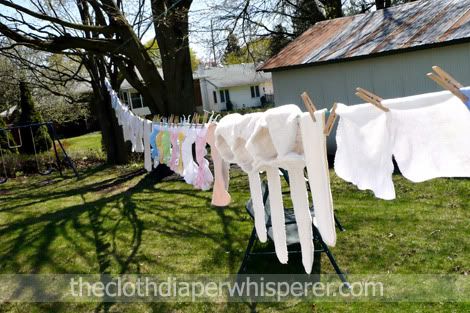
To me the most important factor in anything diaper related is how easy it is to clean. Drying time is a big factor in any wash routine. I chose to evaluate the different materials in relationship to dry time. After washing all 4 stuffins, I hung them on the line outside and evaluated dryness every 15 mins. The FST was dry within 30 minutes, earning a 4. The minky insert came in a close second, getting a 3 for dry time. The microfiber insert took about 3 hours to dry, so it earns a 2. Lastly, I took the prefold down after 4 hours and it was still damp, coming in last with a 1.

Stuffability
Lastly, I wanted to evaluate ease of stuffing. I am getting ready to return to work and I would like to spend the shortest amount of time stuffing diapers as possible.

  • Minky- I love the feel of minky. Soft to the touch and it glides into the pocket effortlessly. Add the fact that it is designed for this diaper and requires no folding and minky gets a 4.
  • Microfiber- This is a personal preference but the feel of microfiber gives me the willies. This friction also makes stuffing the pocket slightly difficult, so I gave microfiber a 3.
  • Thirsties Hemp Prefold- I love the jersey feel of this prefold. To fit in the pocket, the prefold must be trifolded before stuffing. Although this takes less than a minute, it is more labor intensive than the other two inserts, so it receives a 2.
  • FST- The flour sack towel comes in at 1 because it requires so much folding.
Final totals:
Minky: 14
Microfiber: 13
FST: 12
Prefold: 10

I believe each of these stuffins have value in different circumstances, that’s why I have a variety in my stash. What is your favorite pocket stuffin?

Lindsay is a first time mom to a 2 month old little girl and a crazy dog. She lives with her quiet husband in Illinois and is slowly navigating the journey of motherhood one cloth diaper change at a time. Follow her adventures at thedogatewhat.blogspot.com.

Like Tweet Pin It

What's in Your Pocket?

Read the full story here...

Iʼm a little bit embarrassed to admit that I was not even planning my next pregnancy when I started obsessing over newborn cloth diaper options. We started cloth diapering our son at 2 months old, and so he went right into size smalls and one-size diapers. My usual justification for splurging on the good stuff, diaper-wise, is that weʼre going to have more children and so get (hopefully) many years of use out of each diaper. However, even with more babies to come, the fact of the matter is that they just donʼt stay tiny that long, and while theyʼre tiny they poop A LOT. So I agonized over the best way to not spend a lot of money on something that wonʼt be used for long, but of which you also need many!

After months of “casually” (read: obsessively) looking online at different makes, models and types, I finally settled on buying 1 dozen all-in-ones and 1 dozen prefolds with four covers. I thought that I would love the all-in-ones because I definitely prefer those and pocket diapers for my son. And I thought the prefolds would be a cheap way to bulk up the stash, but that I wouldnʼt really like them at all.

Way back in the day, when I first started on the cloth diaper journey with my son, I had bought a package deal of a well-known brand name that included 2 dozen prefolds and 6 covers. They were so bulky, held stink, the covers were plain white (blah!) and my son hated the wet feeling next to his skin. I eventually sold them on Craigslist and good riddance! On to cuter, trimmer, albeit more expensive diapers.

Since I had such a low opinion of prefolds from that experience, I was skeptical about how much people raved about using them on newborns. I read a lot of comments online from people who normally prefer pocket diapers, saying that for their little teenies, prefolds were just right. And since Iʼm ultimately cheap (isnʼt that a huge reason why we all cloth diaper??) I decided that for about $20/dozen at Green Mountain Diapers, I would give them a shot. All the other options were just way more expensive.

So about a month ago my sweet baby girl was born and I was stoked about getting to put her in her first little cloth dipey! She looked so cute in her colorful girlie diapers! She was 7lbs 11oz at birth and quickly went over 8lbs in the next week or so (sheʼs somewhere in that range in these pictures).

Imagine my surprise when I discovered over the course of a few days that the all-inones I envisioned myself preferring turned out to be just about worthless and leaky while the prefold/cover combo was bullet proof! I wasnʼt expecting that! I began to bypass the all-in-ones when picking out a new diaper during a change, in favor of a prefold. And for over night and outings - prefolds all the way. Are the all-in-ones trimmer and fit nicely? Sure. But she pees right through them, wetting her whole outfit and whoever is holding her. Not just a little damp around the edges...Iʼm talking flowing pee. The prefolds? She can wear them all night long (8ish hours) and not the slightest wetness outside where it should be. They even hold in the infamous breast milk poop and it rarely gets on the cover either.

The downsides to prefolds: my husband is still a little intimidated by how to put them on. I use a snappi to close them, so itʼs really easy - no pins - but heʼs just not as confidant in how to put them on correctly. Also, they are bulkier than the all-in-ones, although that has become less of a factor as sheʼs gotten bigger. But compared to how bulky my first experience with prefolds were, these arenʼt bad at all. As a matter of fact, at a baby shower recently, another cloth diapering mama raved about how trim her diaper looked. The main reason why the bulkiness isnʼt as bad as it could be is that they are specifically newborn sized prefolds (orange edge Green Mountain Diaper brand). The last downside is that it does take just a few moments longer per change because there are two steps (diaper, then cover) to put on, versus just velcro-ing up a one piece diaper. None of these downsides are really deal breakers for me, outweighed by all the positives - theyʼre cheap, they work, I donʼt have to worry about her outfit (or mine!), and the covers make them look really cute. (My favorite kind - newborn Bummis super brite!)

So Iʼm a convert. I still prefer the ease of the bumGenius and Fuzzibunz diapers that I use for my son and when my daughter gets big enough sheʼll be in those too. But for this newborn stage, I highly highly recommend prefolds because theyʼre cheap and they just plain work best. Give them a shot “next time”!

By Stephanie Gossett
Like Tweet Pin It

Surprised by Love - for Prefolds!

Read the full story here...

When our mornings started consisting of wet pajamas and damp crib sheets, I knew I needed a fix for my daughter's nighttime diapers - and fast! I had been relying on a Rumparooz pocket diaper, stuffed with the 6r microfiber soaker that comes with the diaper as well as a FuzziBunz microfiber insert from a medium perfect size diaper. It worked great for months but after doing some research it seemed like hemp was the clear solution. Though I know my share of people who use disposables at night it just didn't seem like a good option for us; with a 20-month-old and another baby on the way I needed a long-term, economical solution. We alternate between four different solutions:

- A Rumparooz pocket diaper stuffed with the 6r microfiber insert and either the JoeyBunz or JoeyBunz Premium
- A cover (either Thirsties duo, Rumparooz, or Sweet Pea) stuffed with the Thirsties Stay Dry Duo Insert on top and a FuzziBunz microfiber insert underneath
- A cover with a Flip insert on top plus a HempBabies insert and a microfiber insert
- A Thirsties duo fitted stuffed with a smaller microfiber insert and HempBabies insert plus a cover

Now that we've been using hemp at night, I am loving its absorbency capabilities and picked up some more inserts to use during the day, particularly with the FuzziBunz one size. Though those diapers come with two microfiber inserts, I use the larger one paired with a HempBabies insert and find myself grabbing it when I'm headed out to do errands and might not be able to change my daughter right away. Before hemp, my daughter's diaper always looked like a sumo wrestler. Her nighttime diapers are still big, and huge compared to a disposable, but it is a great feeling putting her to bed knowing she'll wake up with dry pajamas and I won't be changing the sheets in the morning!

Ann J. is a cloth diaper fanatic and mom to a 20-month-old girl with the cutest cloth diaper butt on the block!
Like Tweet Pin It

How Hemp Saved the Night

Read the full story here...


Fluff Friday:
2-Knickernappies One-Size Cloth Diapers with Microfiber inserts


Like Tweet Pin It

Fluff Friday 147

Read the full story here...

When we cloth diapered my daughter, we used bumGenius One-Size diapers - almost exclusively.  While we were happy with the overall performance of the BGs, we wanted to try a different brand with our son.  I had heard about FuzziBunz and how fantastic they were.  So - we ordered a good supply of size small FuzziBunz Perfect Size diapers.  I also had one FuzziBunz One-Size diaper to try.

I was really surprised when comparing the two.  When I had read about the diapers, the Perfect Size diapers promised a more trim fit than the One-Size.  However, when using the diapers, I found quite the opposite to be true.  The Perfect Sized diapers seemed a little more bulky to me than the One-Size FuzziBunz.  I found the One-Size to be very trim on our chubby baby.  When he outgrew the size small FB, we switched to the medium sized FBs.  I noticed the very same thing.  The Perfect Sized medium diapers were much more bulky than the One-Size FuzziBunz.

The other differences aren't as pronounced - but present nonetheless.  I find with the Perfect Size (PS) diapers, I get more leaks during bedtime use.  The OS diapers seem to be a better fit, overall - with fewer leaks.

As for ease of use - both diapers bode well.  But the Perfect Sized diapers are a bit easier - since I don't have to adjust the elastic in the legs.  The One-Size (OS) diaper is much more durable.  When we used the PS size small, a couple of them didn't hold up well and the PUL started to wear out here and there.  The OS diaper that we have seems to be made of higher quality materials all together.

As for the inserts - I can use almost any type/size of insert with the PS diapers.  Alternately, the OS diapers seem to only fit the FB inserts that came with them.  That is a bit annoying when I'm in a hurry and just want to grab a diaper and an insert on the run.

Both diapers are great.  I like using FuzziBunz well enough.  I think the diapers are just as good - if not better - than the bumGenius line.  They are soft against my baby's skin, the colors are pretty, they wash well, they are easy on the planet and equally easy on the wallet.  No matter the size, FuzziBunz diapers are definitely good diapers.

-Amanda W.
Like Tweet Pin It

FuzziBunz One-Size vs. Perfect Size

Read the full story here...

All your stalking of the mailman has just paid off- your Fluffy Mail has been delivered!  Oh joy!  Oh rapture!  Oh wait!  .....How do I wash all of this?  If your box contains more than one kind of diaper, it can get confusing.  What can be washed together?  What can't?  Some diapers come with prepping instructions, so follow those if they're included.  If not, read on for some general guidelines. 

Cotton prefolds. They're awesome pocket inserts, they're great pinned or Snappi'ed, and they're nice for tri-folding in a cover.  But when they come to you all flat and stiff, they sure don't look like the soft, absorbent diapers you were expecting.  They need to be washed 4-5 times before you use them.  Do they need to be dried between every wash?  Not in my opinion.  Wash them twice, dry the once (on hot) then wash them 2-3 more times and dry them again.  Now they're ready to go!  They'll reach full absorbency after 8-10 washes, but the initial 4-5 washes will get the natural oils out of them that you don't want coating your other diapers.

Hemp inserts/prefolds.  They're the most absorbent diaper inserts, but not when you first get them.  They need a good 5-6 washes before the natural hemp oils are out of them.  If you've purchased a good stash of them, you can run them through your washer three times, then dry them.  Then wash 3 more times, then dry them.  If you only have a few hemp inserts, you may want to shorten the process by boiling the hemp on the stove.  Stick it in a pot of boiling water, and boil for 15-20 minutes.  Then run it through your washer once and dry. 

Microfiber inserts.  Wash them once and then dry them- now they're ready to use!  (There had to be an easy category, right?)

Pocket diapers/covers.  Pocket diapers that have fleece or suede cloth linings in them and most covers just need a single wash and dry before using.  You can wash these with your microfiber inserts, too. 

All-in-one diapers.  If the AIOs have microfiber as their soakers, you can wash them with your pockets and covers.  If they have natural cotton, bamboo, or hemp fabrics in them, then they'll need 3-4 washes before you use them- and they should be prepped separately from your other diapers. 

Yes, Fluffy Mail Day can turn into Prepping Day if you have a variety of diapers in your package, but following the prepping instructions can help your diapers function at their best- and that's what you want from new diapers!  Once everything is prepped fully, you can thereafter wash all of your diapers together in big happy, fluffy loads.  :)

By Stacy F.
Like Tweet Pin It

It's Prepping Time

Read the full story here...

We have some exciting news to release to everyone! As you may already know, BabyKicks officially launched our new 3g Bumboo Pocket Diaper a few weeks ago! We have taken our already amazing Bumboo Pocket and modified it to be, what we consider, one of the best Pocket Diapers available. We are very happy to make the new 3g Bumboo Pocket Diaper available to everyone and hope you enjoy it just as much as we do! This new version of our pocket diaper boasts all the benefits of the original Bumboo Pocket Diaper such as: A one size design Super soft fleece leg gussets for air flow Bamboo rayon inner lining Front stuffing pocket And, included hemp JoeyBunz insert.

But, what’s even better about the new 3g Bumboo Pocket is that is has been modified and improved to a stellar degree, and boasts new features like:
  • A unique newborn snap closure for a snug and comfortable fit on the smallest babies
  • Wider pocket for easier stuffing
  • Thinner wings to accommodate those adorable, chunky baby thighs
  • Trimmer design for a more comfortable fit and chic look
  • New One Size JoeyBunz insert
  • And, consumer chosen BOLD and BRIGHT colors!
All of our colors were chosen by consumers, and there are NO pastels. The new colors are Meadow (green), Poppy (red), Azure (blue), and White w/multicolored snaps.

Along with the 3g Bumboo Pocket launch we want to “Make cloth diapers go VIRAL!” and we are releasing 4 short comedic videos to help spread the word. We are using a fun and edgy approach to promote our new 3g Bumboo Pocket Diaper and cloth diapers in general to the public mainstream. In addition to our viral videos we will also introduce a BabyKicks computer game which allows consumers to accrue points towards discounts and gift certificates on our products!

We have even designed a whole new website dedicated to the 3g Bumboo Pocket and our signature Organic Fitted cloth diapers. The new site is full of fun animations and useful information, and was even specifically designed to be “daddy friendly”.

As you can see, we have a lot of exciting ideas in store to accompany the release of our new diaper.At BabyKicks, we are always looking for new ways to excel our products and make them more comfortable, convenient, and dependable for parents. We know that every child is unique and we believe that each and every one deserves unique pampering. This is why our new 3g Bumboo Pocket Diaper is natural and organic, and available at an exceptional value of only $18.50 each. We are very excited about this new phase of BabyKicks and we hope you will help us spread the word about cloth diapers as well as the new 3g Bumboo Pocket Diaper!

But wait, we have one more surprise for you! In addition to our three new bright colors we have a FOURTH color that is available only at Kelly’s Closet! This color was the most requested of them all. And it is (drum roll please)…. Chocolate Brown! This version of our 3g Bumboo Pocket will also be available with a variety of different colored snaps including orange, pink, green, and brown! We hope you enjoy our new 3g Bumboo Pocket Diaper, no matter which color you choose, and we look forward to continuously helping make babies healthy and happy!Sincerely, Your BabyKicks Team
Like Tweet Pin It

The New BabyKicks 3g Diaper Goes Viral

Read the full story here...

Things I have learned about cloth diapering a newborn. When my son, HB, was five months old, I had to put away all his newborn diapers. As I did this, I kept thinking about all the trials and errors that I’ve had with cloth diapering. Here are some of the things that I’ve learned:
  1. Gussets are awesome! Because breastfed stool is so runny, it can easily squish out of a diaper.
  2. Your Birdseye prefolds aren’t really prepped until there’s very little lint in your dryer.
  3. You don’t have to fold diapers but you might want to so that you can put them on the baby correctly in the middle of a long sleepless night. You avoid lots of accidents and get more sleep that way.
  4. Prefolds must be all inside the diaper. Any part of it sticking out leads to leakage. And make sure that all-in-ones or pockets haven’t folded over in the back. This can also cause leaks.
  5. Get a supply of inserts or doublers, which are really the same thing. I had heard you needed them at night for older babies, but never realized that because newborn stool is so watery it can seep through the prefold into the cover.
  6. All-in-ones don’t seem to dry completely in the dryer so they may still be wet in the evening. It maybe worth it to use prefolds with a cover or prep a pocket diaper for night time instead. They dry better.
  7. You are not a horrible parent if you diaper pail stinks when you open it. The odor will only get worse.
  8. Babies can outgrow newborn sizes so quickly. Investing in an adjustable diaper or diaper cover is a good idea, but many will only fit babies 10 lbs or more. Thirsties duos are the exception.
  9. If it says it will fit 8 lbs plus, go ahead and buy the smaller size (5lb-10lbs) because they will fit better and leak less. Refer to number 8 if money is tight.
  10. Snappis are great! HB managed to wiggle his prefold out of place if it was laid inside the diaper cover.
  11. Read the fine print on detergent. I didn’t realize that it had a built in fabric softener.
  12. Even though newborns grow at lethal speeds, you will still need a lot of diapers in the smaller sizes because you will go through a lot of them in the course of a day. They can always be used on another baby or can be resold if they are in good shape.
  13. A good rule of thumb for buying covers is that you buy a cover for every three or four prefolds you purchase. Since you will probably need three dozen prefolds to get started, that means you need 9-12 diaper covers. This is if you are washing every other day. If you have a small budget, you can buy less and wash more. If you have a bigger budget, you can buy more and wash less, but I would not go more than three days without washing diapers.
  14. Men can learn how to change a cloth diaper. My husband can use prefolds very quickly now. You just have to show them how and be very patient.
  15. Make sure you remember to put on a diaper cover. Keep it close to you while changing the baby, and you might have a better chance of remembering it when your really really tired.
  16. White diaper covers do get dingy. The inside of diapers or prefolds will stain. Don’t stress yourself over having a bright white look on your baby’s bottom. Get diaper covers will colors instead and hang the prefolds outside.
By Laura W.
Like Tweet Pin It

Things I Have Learned about Cloth Diapering a Newborn

Read the full story here...

We all know the ultimate leak issue: your diapers are repelling or have build up and are not absorbing as fast as you would like. There are a ton of tutorials out there about methods of stripping, but I'm here to talk about your everyday leaks. The little 'oops' that you didn't see coming and leaves a patch of wet on your little one's onesie. I've been cloth diapering for almost a year and a half. I STILL MAKE MISTAKES. You heard right, and I bet all the other mamas out there with experience are nodding their heads, too. Let's face it, we all get busy and sometimes those hectic moments can make you fall into a leaky diaper trap. I'm here to 'magic' away those leaks! A little smoke and mirrors, and problems solved. Here's my top tricks:

1. Insert issues. Whether you are using a prefold or fitted/cover, an AI2 or pocket, those inserts can wreak havoc on your baby's nice clothes. For diapers where you use a cover, be sure to check that the insert is tucked in all the way all around the diaper. A wiggly baby can pop a prefold out the back of your cover and in a onesie, you might not even notice until that telltale wet mark appears! Be sure to lift up your baby's legs as well, and poke the insert in if it's hanging out, and readjust the waist if necessary, to get a nice, tight fit around those legs! No gaps=no leaks. For pocket diaper users, you know the drill: you start stuffing and folding and you get pretty good at it, doing it faster and faster... until you get a leak and start to panic! Finish changing your baby and assess the diaper. More than once I've put the insert in and not gotten it completely smooth. No absorbent material means that the urine runs along the pul until it finds a place to 'land', usually the leg elastic. A bump in the bottom is worth a leak out the legs! My biggest trick? I get my husband to stuff the diapers. His hands are twice the size of mine and he can smooth out an insert in about 15 seconds, whereas it might take me a full minute to get a perfectly flat stuff!

2. Clothing issues. Yup, you heard right, your baby's clothing might be to blame. Recently I was noticing more leaks at my baby's legs and I just could not figure it out. It was only happening with her onesies, though, not any other clothing. Then I discovered one day during a diaper change that I was pulling her onesie OUT of the leg holes on her diaper. All her crawling and toddling had shoved the material right into the wet zone. Size up your onesies and your leaks disappear!

3. Time warp. You may have thought you put that diaper on at 7 in the morning, but really, it was 6. Every too-full diaper will eventually leak, if there is no where for the urine to go. If your inserts are super-duper full and heavy when you pull them out, you may have gotten into a time warp. This often happens to me when we're out somewhere. I don't wear a watch and I lose all track of time. What do I pull out of my hat this time? I put a clock in every room and I make it a point to mentally and sometimes verbally say the time out loud to help me remember. If I'm out somewhere, I mentally calculate about what time I'd like to change the baby and then ask what time it is like a parrot. Another option if you are a techie? Go ahead and set an alarm on your phone to remind you. See #5 for more traveling ideas.

4. Brand loyalty. You just buy a diaper and think that the inserts that came with it should work fine, after all, they came with the diaper. A friend of mine had some diapers that she tried out on all of her babies, and had leaks with them all and put them away each time. After seeing me post on facebook about cloth diapers, she approached me with her problem. We went through several things, and finally she came to the conclusion that the inserts to her new AI2 diapers she purchased might fit in her old pockets. They were a lot more absorbent than her 5 year old inserts. If something doesn't work for you, try a different brand!

5. Heavy wetter. Super soaked inserts might also mean that your baby is going through a heavy wetting stage. You can double up your inserts or try buying new inserts/doublers of a thirstier material than you currently use, like hemp or bamboo. A cloth wipe will also do in a pinch! Double up at nap time, during car rides, and at night. I triple stuff my toddler at night. If your stash is low, you might try buying some diapers that have inserts with doublers that attach with snaps. I have a few diapers that I purposefully leave double stuffed at all times. I can take them with me on trips and know that I have a 'super dipe' for the ride home, for impromptu trips while visiting family, or times like playing outside, when I know a diaper change will cause a full-on toddler tantrum!

6. The sneaky rolling over belly sleeper. All the sudden your baby starts sleeping on a side or his/her belly. You get wet sheets. Luckily, this stage doesn't last long, or it didn't for us anyway! Your baby will adjust to sleeping on his/her belly and it will ease up, but some sleight of hand can be done with an aplix diaper pulled REALLY tight, and some fleece pjs. Some diaper covers are made of fleece, and I know there are mamas out there who go cover-less and let fleece pants take the hit. Putting a doubler up front should also help.

Don't let the leaks get you down! You chose cloth because of a number of factors, most of which are not changed by a tiny leak every once in a while. Follow these tips and soon those 'oops' leaks will be gone. Just like magic!

By Jill S.
Like Tweet Pin It

Abracadabra: The disappearing leak

Read the full story here...

A mom has to be a little more organized (and dare I say, smarter) to use cloth diapers. Face it, disposables are spontaneous and dummy-proof. Simply buy more when you run out. That's it! With cloth, you research the styles and wash routines, calculate dirty diapers, time and money. When you run out of cloth diapers, you wash them and start over...and there's no simple run to the store to buy more.

Cloth diapering has taught me to become more of a thinker and planner at home. But, traveling with cloth takes that planning one step further. A trip with cloth requires a system, structure, and advanced preparation. I do not appreciate strict regimens invading my impulsive traveling style! Carefree disposables and I seemed a perfect match for the road, and I'd leave the planning for home. For example, some people use (gasp) a list when they pack! Not me. Even before kids (and cloth), I waited until an hour before we needed to leave, and threw some stuff into a bag. With a very busy 3 year old and 16 month old, and pregnant with our third child, there's no hope of suddenly changing my hurried habits, I'm hopelessly unpredictable when I pack and travel! I considered traveling with cloth for about 5 minutes and decided my friends and family wouldn't want me washing dirty diapers in their washing machine, laundromats are a scheduling impossibility, and I absolutely could not survive without my diaper sprayer.

Traveling with cloth sounded like it would drain the fun right out of a vacation. Then, I discovered the Cloth Diaper Whisperer's blog! I saw many different ways to pack diapers, and learned about flushable liners. I even read in the comments that one mom simply throws all her cloth diapers into a big bag and leaves for the weekend! I could do this! A month prior to this trip, I ordered a wonderful Planet Wise Wet/Dry bag from Kelly's Closet. I was remediating my helter-skelter traveling ways, and cloth was helping me do it! The day of our trip, my true colors shone brightly. I realized with absolute horror that I had not washed my diaper stash! I had only 3 clean BumGenius diapers tucked in the diaper bag! How is it possible to have EVERY single diaper dirty, when I needed them ALL clean to begin the trip? Did I mention I'm hopeless? I had a breakdown and told my husband we'd have to buy disposables on the way because of my error. "No way! We've got time, throw them in the wash. We're not spending any more money on diapers. You said so, remember?" Did I really say that? No more disposables?! But this is a cloth diaper emergency! I wasn't talking about emergencies! I tossed the diapers in the wash and glanced at the clock. Didn't he remember our wash routine includes 2 wash cycles and an extra rinse? They would still be wet and unusable...and we had a deadline. I just knew we'd be stopping for disposables that night.

Hours later, we arrived at our hotel, exhausted. There was no dryer to be found, my daughter was wearing the last clean cloth diaper, and I held a bag full of clean, wet diapers (and still no disposables). My eyes searched the room for drying locations, and didn't see many options. Inserts laid out flat would take forever to dry. Remembering the recent post where a mom showed how she hung her diapers on coat hangers, I opened the closet in the room hopefully. One lonely hangar (wooden, no bottom). But a luggage stand stood in the corner, and the light bulb went off with a brilliant brainstorm. Set up in front of the room's A/C unit, the luggage stand was the perfect travel drying rack. My inserts were dry and ready to use in the morning, along with the shells I had hung in various places around the room (I love how they dry quickly no matter where you stick them!). This trip taught me that using cloth diapers when you travel does not mean you sacrifice your spontaneity or personality. You can still be a disorganized, last-minute-packing, and too-busy-to-prepare-for-this-trip mom. You don't have to resort to disposables. You don't even need to remember important things, like making sure your stash is clean for your trip! Cloth diapers are a perfect match for ANY traveler, even the most decidedly unorganized and carefree!

By Julie G.
Like Tweet Pin It

Carefree Travel with Cloth

Read the full story here...

Basic cloth diapering setups can vary a great deal, including things like the diaper body, cloth diaper inserts, liners, covers, wipes and more. It can be a lot for a new parent to take in, that’s for sure. However, with a bit of education and experience, you can begin to decode the lingo that seems to exude from enthusiastic cloth diapering parents. After all, when you find something better for your baby and your pocketbook, it’s hard not to be excited about it. Cloth diaper inserts tend to be one of the most confusing products, with different types being ideal for different diapering setups. In some cases, products that look extremely similar can actually have different uses entirely.

Of course, the category of cloth diaper inserts is quite broad. An insert is, after all, nothing more than a diapering component that goes on the inside of the diaper. All cloth diaper inserts don’t have the same job in the diapering setup. Here are a few of the most common types of inserts and what they are used for.

Pocket Stuffers
In most instances when you see cloth diaper inserts referred to, you will be dealing with some type of pocket stuffer. Pocket diapers are made with a waterproof outer core and coupled with an inner layer that usually is designed to wick moisture to the inside. When that happens, however, there must be something stuffed inside the pocket diaper shell to soak up all the liquid. This is where cloth diaper inserts come in. The insert is placed inside the pocket shell and provides the absorbent core necessary to make your diaper work properly. In many cases, the cloth diaper inserts that you are dealing with will be designed specifically to work with the shape and size of a particular brand of pocket diaper shell. Fuzzi Bunz has a different insert, for example, than bumGenius. While each maker designs the cloth diaper inserts that they feel are ideal for their diaper, you can certainly mix things up and switch out different inserts to see which you prefer. This, of course, works best if you have several brands on-hand. If you do find that you prefer one brand of cloth diaper inserts over another, you can usually purchase a set of inserts separately without having to buy the shell.

Other Cloth Diaper Inserts
Depending on where you are looking at cloth diapering products, other diapering components may be listed as cloth diaper inserts. For example, a doubler may be designated in this category. Not only that, these are often identical in both visual appearance and use. The main difference is that doublers are not usually designed exclusively for any particular pocket diaper, but are a more universal way to add extra absorbency. Doublers can be used in both pocket, fitted and all-in-one, or AIO, diapers.

You may also see diaper liners lumped together with other types of cloth diaper inserts. Liners are not for absorbency, however. Rather, they are a barrier against wetness and serve as a means to hold in solid waste, making it easier to deal with. Liners can be either washable or disposable.
Like Tweet Pin It

Cloth Diaper Insert Lingo

Read the full story here...

There are so many great cloth diapering options out there, I want to draw your attention to one more! I believe people who decide to cloth diaper strive to get the best value for their money without sacrificing baby's comfort. What if you could combine the value of a prefold with the comfort/ease of a pocket diapers? Let me tell you how I did...

I love my pocket diapers. I adore the ease of using a pocket diaper as well as their ability to wick mosture away from baby's bum. My favorite and trusted night-time diaper is the bumGenius One Size 3.0 pocket diaper. I found the 100% polyester suedecloth used in them is wonderful for keeping baby dry for long periods of time. The only thing with these is that they can be a little more pricy when looking to use them all the time.

On the other hand I like the great value of my Chinese prefolds. They are relatively inexpensive and are often called the "work-horse" of a cloth diapering stash (I know they are mine). The downfall of these are that they don't usually hold up over night and you have to add liners to wick moisture away.

So, I decided to go searching for something that I could inexpensively add to my pre-existing stash (which largely includes Chinese prefolds and microfiber inserts) to give me the same functionality as my wonderful pocket dipes.

While searching I came across this amazing product that will do just that! It's called the bumGenius Stay Dry Insert Sock!

These insert socks have many benefits to them.

1. They are made of the same suedecloth used in my beloved bumGenius diapers. Essentially transforming my prefolds and extra microfiber inserts into pocket diapers when coupled with a good diaper cover (I prefer the one size Wonderwraps).

2. That's right, these insert socks are big enough to stuff a premium Chinese prefold or two inserts with ease.

3. These are great for using when you are out because like the popular two in one diaper systems, all you need to pack are a few pre-stuffed insert socks and an extra diaper cover and you're ready to go. This frees up valuable space in your diaper bag.

4. As I mentioned before, these are SO inexpensive (but very well made). If you already have prefolds/inserts and some diaper covers you can convert them with insert socks for a fraction of the cost it would be to buy all new pocket diapers. And in my opinion they work just as well!

By Kelley M.
Like Tweet Pin It

Transform Your Prefolds into Pocket Diapers!

Read the full story here...

There can be a lot to keep track of when you begin cloth diapering. From inserts, to wipes, to diaper doublers, what does each component do? Are inserts the same as doublers? What are each of these items used for? By examining each part of your diapering system, you can become familiar with the nuances, details and proper usage for each component.

Inserts vs. Diaper Doublers
At first glance, both cloth diaper inserts and diaper doublers look quite similar. Both are generally made in a long rectangular shape and are comprised of absorbent materials to hold your baby's waste. These two items do, however, have slightly different uses. Inserts are designed to fit inside of a pocket diaper to provide the sole absorbency for the entire diapering system. They may be shaped to fit a particular brand or style of diaper so that all parts of the diaper shell have absorbent capabilities. Inserts may also look similar to a prefold diaper so that they may be folded for customized absorption in your cloth diapers. Inserts are made with extremely absorbent natural or high-tech fabrics, such as microfiber. Cloth diaper designers often try to make inserts as trim as possible so that the diaper performs well, while still maintaining a trim profile on your baby.

Diaper doublers have a slightly different function. They are used as an extra layer of protection in another diaper. Unlike inserts, they are not intended to be the sole absorbent part of a diapering system. Instead, they add absorbency for times when you might need a bit more performance. Parents often use doublers for nighttime wear, sitters and when they are spending the day outside the home. Because diaper doublers often lay next to the skin, they may have special liners built in to protect your baby's skin.

Using Diaper Doublers
How you intend to use your doublers will determine what design and features are best for your cloth diapers. If you use an all-in-one prefold or fitted diaper you will be using a doubler that will sit next to your baby's skin. Many parents using this system favor doublers that have a wicking top layer. Popular wicking fabrics include lightweight polar fleece and suede cloth. This wicking material will sit on top of the absorbent layers and pull wetness to the inner layers of your cloth diapers.

For those that use a pocket style diaper system, diaper doublers can be placed inside the diaper shell, along with the absorbent insert. This allows you to customize your cloth diapers according to your immediate needs. If you do plan on using your doublers in a pocket diaper, you will not need to invest in a doubler with a wicking layer. However, you may want to have a few on hand just in case you want to add absorbency after your cloth diapers are already stuffed.

Purchasing Diaper Doublers
Most parents prefer to have at least two dozen cloth diapers in rotation at any given time. It's a good idea to have at least one diaper doubler available for each cloth diaper that you regularly use. If you start using cloth diapers on your newborn, purchase a set of smaller doublers to reduce bulk. At Kelly's Closet, diaper doublers are very affordable, ranging from $3-6 each.
Like Tweet Pin It

Diaper Doublers vs. Inserts

Read the full story here...

BabyKicks has been designing and manufacturing superior hemp diapering products in the USA since October 2000.

Krista, the original founder and owner of Babykicks was inspired to start BabyKicks after finding the new world of WHAM-made diapers on the internet which did not exist when she had her first three kids, and invented the now famous Joey-Bunz Inserts.

In February of 2007 Krista decided to sell BabyKicks to two young entrepreneurs who share her passion for the environment and are in love with the BabyKicks product line-up. As a result of the new Family based ownership BabyKicks re-located from Chicago, IL to the eastern shore of Maryland and is steadily introducing exciting new products that make use of the many benefits of hemp based fabric.

In addition to doing our small part to help the environment - hemp based materials are much less straining on the environment then cotton only material - BabyKicks strongly believes in social responsibilities. As a result BabyKicks has been encouraging and sponsoring our employees who take part in charity fundraisers, such as the Breast Cancer 3day March or the Columbia Triathlon (benefiting the Leukemia and Lymphoma Society).

Product Description: Joey-Bunz Inserts BabyKicks Hemparoo® Joey-Bunz Pouch riders for your Pocket Diapers! These are six layers of absorbent hemp/cotton jersey that are only 1/8 of an inch thick, and work great with virtually all pocket diapers. Designed to be trim, absorbent and easy to use since there's no folding. Use one Joey-Bunz for daytime, two for nighttime, or three for a super-soaker and still have a trim fit. Gently contoured to be comfortable for baby.
Joey-Bunz also make GREAT doublers or use them by themselves in a snug fitting wrap.

Joey-Bunz are better than inserts made from man-made micro fibers because hemp is a natural product, grown without pesticides and not bleached, which is very harmful to the environment. Hemp also protects your baby because it is naturally anti-microbial.

Dimensions are as follows:
13½” long, 6” at the widest part of hourglass shape and 4 ½” at the center

Why BabyKicks:
Because we make great, quality products that are made with certified organic materials in the USA. Our Joey-Bunz inserts provide you with top-quality, are extremely durable and compatible
with virtually all other cloth diapers.

Like Tweet Pin It

Product Focus: BabyKicks

Read the full story here...

One of the most common reactions I get from people when I tell them I use cloth diapers (after "Eew!") is: "Isn't it an awful lot of work? I mean, all that laundry..." The answer is of course no, it's not much work at all. Certainly a lot less "work" than I'd have to do to afford disposables. The wash and care routine did take me a long time to develop though.

When I decided to try cloth diapers I didn't know anyone else who had used them in the past twenty-five years or so. I bought a couple of fitted diapers on a whim one day while I was checking out a local consignment store. I had no idea how to care for them, so I asked the owner of the store and she very helpfully wrote me out some detailed instructions.

Considering the fact that those instructions directed me to fill a wet bucket with cold water and vinegar, rinse diapers by dunking them in the toilet and use the strongest detergent I could find and bleach once a week, it's pretty surprising that I stuck with cloth diapers at all. I knew I wanted to move away from disposables though, so one day it finally occurred to me to type "cloth diapers" into a search engine to see if there were any other options and the world of modern diapering opened before me. There were far better diapers out there than the ones I was using, that's for sure! There were also some handy links for How To Care For Cloth Diapers, but more importantly, there were forums and groups for cloth diapering parents in places like Facebook where you can ask questions and get dozens of suggestions, ideas, answers and opinions. Apparently no one else had a big bucket of stinky diaper stew brewing in their bathroom, how interesting! After months of experimentation I have devised a system for washing cloth diapers that works perfectly for me and my family. I will share it with you now in the hopes that some poor clueless newbie will be able to learn faster than I did:

-In my bathroom, which is within arm's reach of the change table in my daughter's room, I have two cheap plastic trash bins from Wal-Mart with locking lids. I put fitteds, prefolds, inserts, wipes and doublers in the larger one and PUL covers and pockets in the smaller one to prevent them from trapping smells.
-Wet diapers go straight into the pails. Dirty diapers either have disposable liners removed and flushed or they are shaken over the toilet and rinsed under the foot-wash faucet in my shower. I never got around to buying a diaper sprayer, although I'd love one! Sometimes I spray them with BumGenius Odor Remover.
-I don't use pail liners. Every three days I dump both buckets into the washing machine and give them a cold rinse, then a hot wash with a bag of soap nuts or some Purex detergent and sometimes a few drops of tea tree oil, then a rinse.
-Every so often, if my diapers seem a little dingy or smelly, I put a scoop of oxy cleaner in the wash cycle.
-If the pails get smelly I rinse them out with water and a drop of tea tree oil while the diapers are washing.
-When the weather is nice I hang everything out to dry in the sun after running a quick tumble fluff cycle in the dryer to soften them up a little.
-When line drying isn't an option I hang covers, pockets and AIO's on a drying rack overnight and dry everything else in the dryer on medium heat with a few dryer balls.
-I wash my wool covers by hand once every two or three weeks with Eucalan and lay them out to dry.
-When everything is dry I pre-stuff my pockets and sort it all onto the change table shelves.

Basically it works out to two extra loads of laundry a week and maybe twenty minutes of folding and putting away (More if my nineteen month old wants to "help"). It's barely even noticeable since I'm doing laundry for six people anyway. I certainly wouldn't call it an inconvenience, and nothing smells as good as clean laundry hung to dry in the sunlight.


- By EdenSky
Like Tweet Pin It

The Day We Wash

Read the full story here...

Earn Free Cloth Diapers